It’s hard to imagine life becoming routine on a riverboat in the Amazon, but by now we had settled into a pretty wonderful one. I’d get up early, have a cup of coffee on the open-air deck, and talk with the other early risers while we watched the river. Sometimes a dolphin would surface. Sometimes we simply watched the world go by until breakfast.
By then, we knew the breakfast routine, too: bread, eggs cooked to order, more coffee, some juice, and a quick rundown of the day’s schedule from Renzo or Guillermo. We were getting better at mixing with different people at meals. If the girls arrived late, we were even brave enough to split up. One woman on the trip knew the figure skating world, and I remember her and Charlie getting into quite a conversation over a meal one morning.
The plan for today was familiar: climb into the skiffs and explore another stretch of river in search of birds and animals. Our two boats had gradually started dividing loosely by age, which seemed to work well for everyone. We also developed a theory that whichever skiff Democrito, our medic, chose would get especially good guide commentary and wildlife sightings. We kept an eye on where he was boarding.
Our morning outing took us along the Pacaya River. With so many waterways to explore, especially during the high-water season, their names and bends were beginning to blur together. Looking back now, although bird and monkey sightings were starting to blur together, it’s the individual encounters that bring this day back.
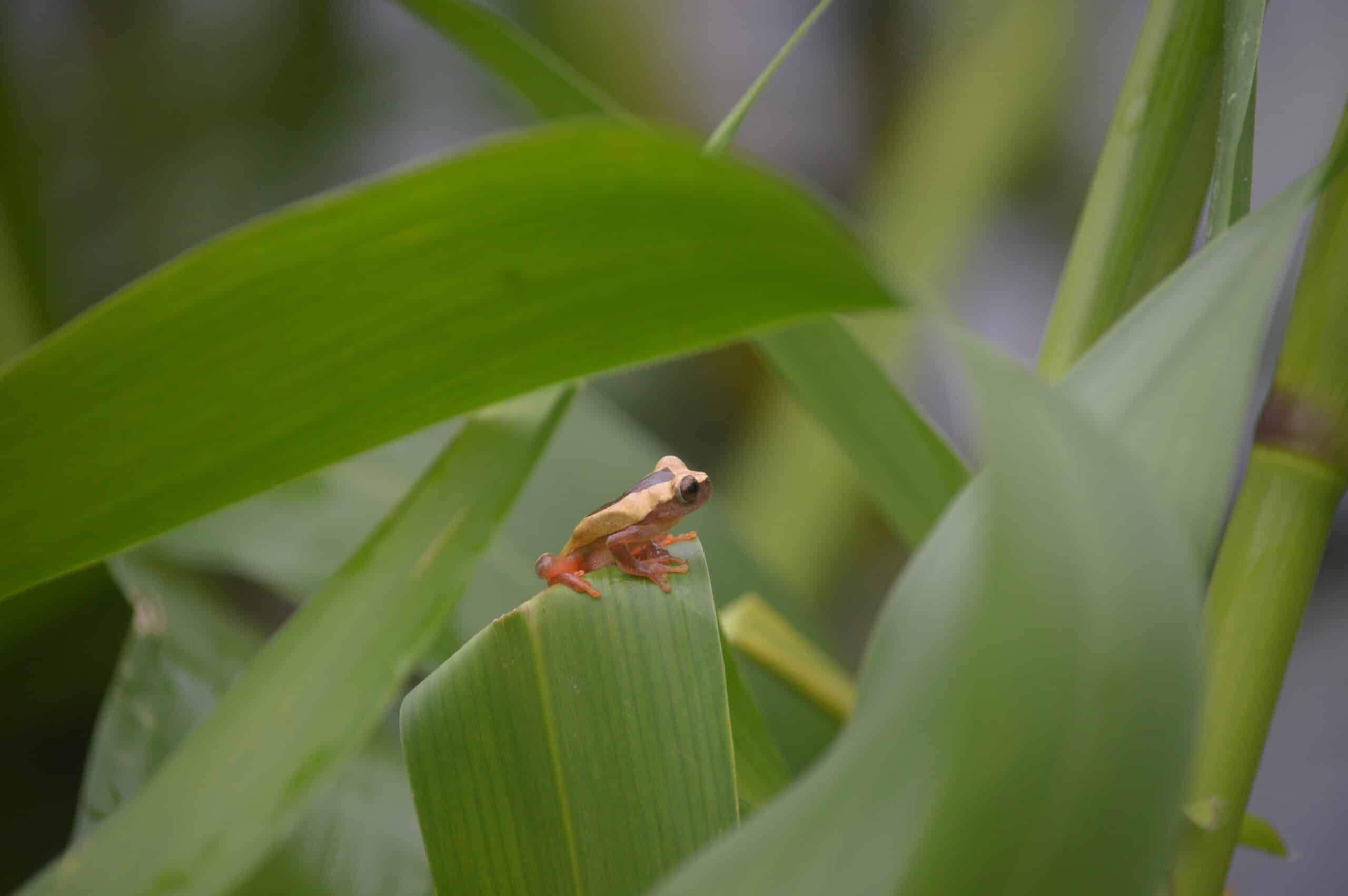
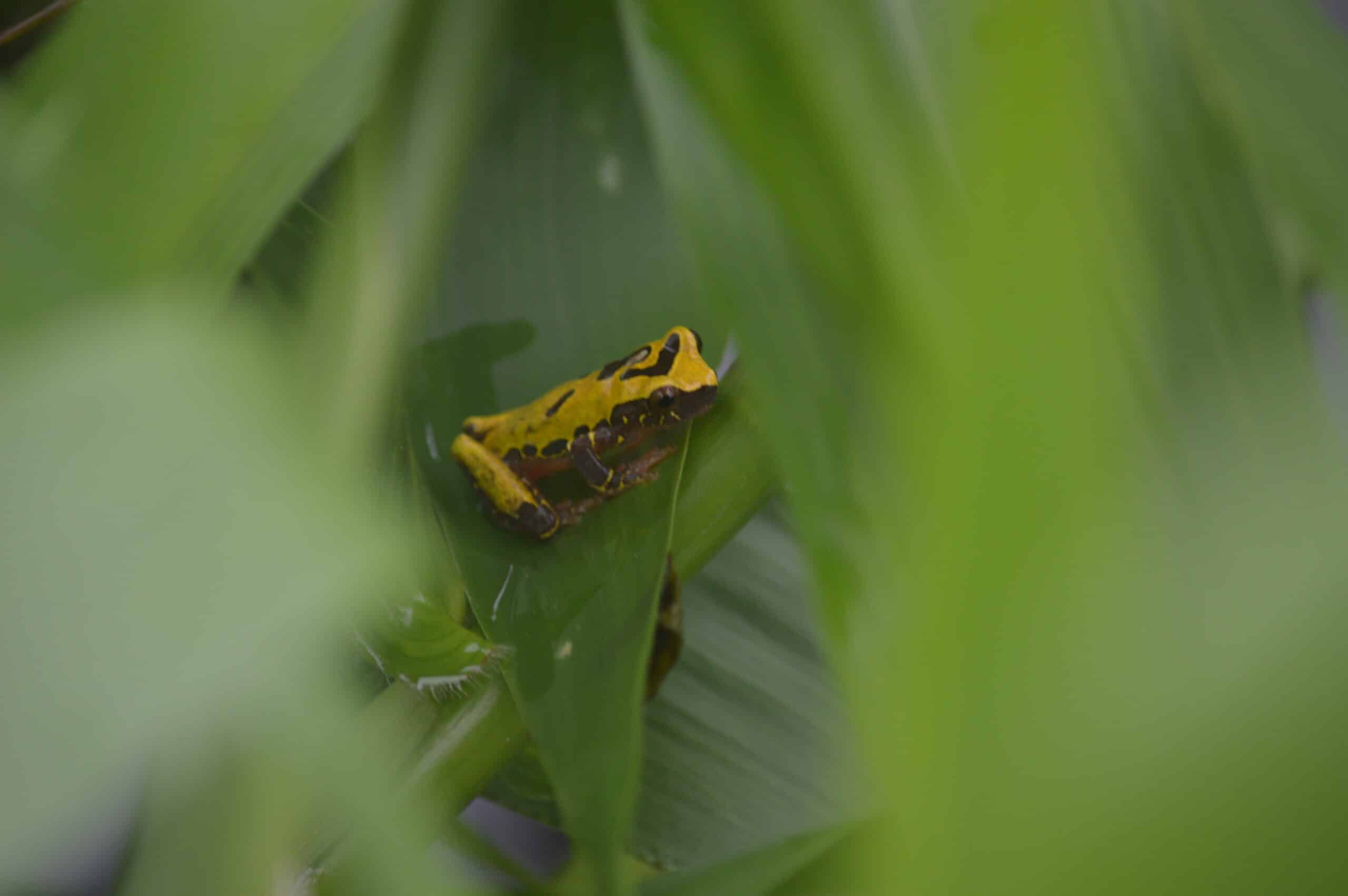
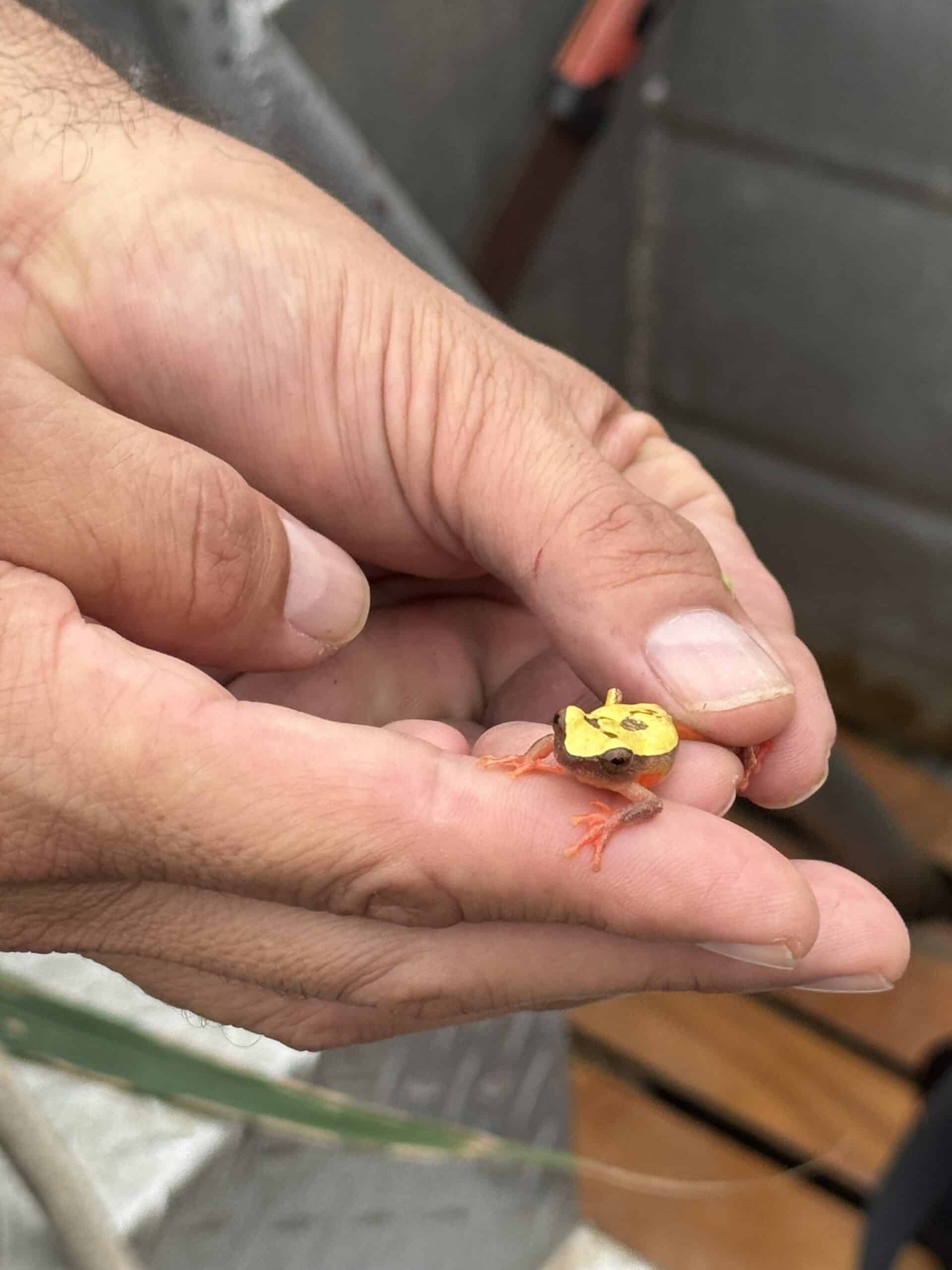
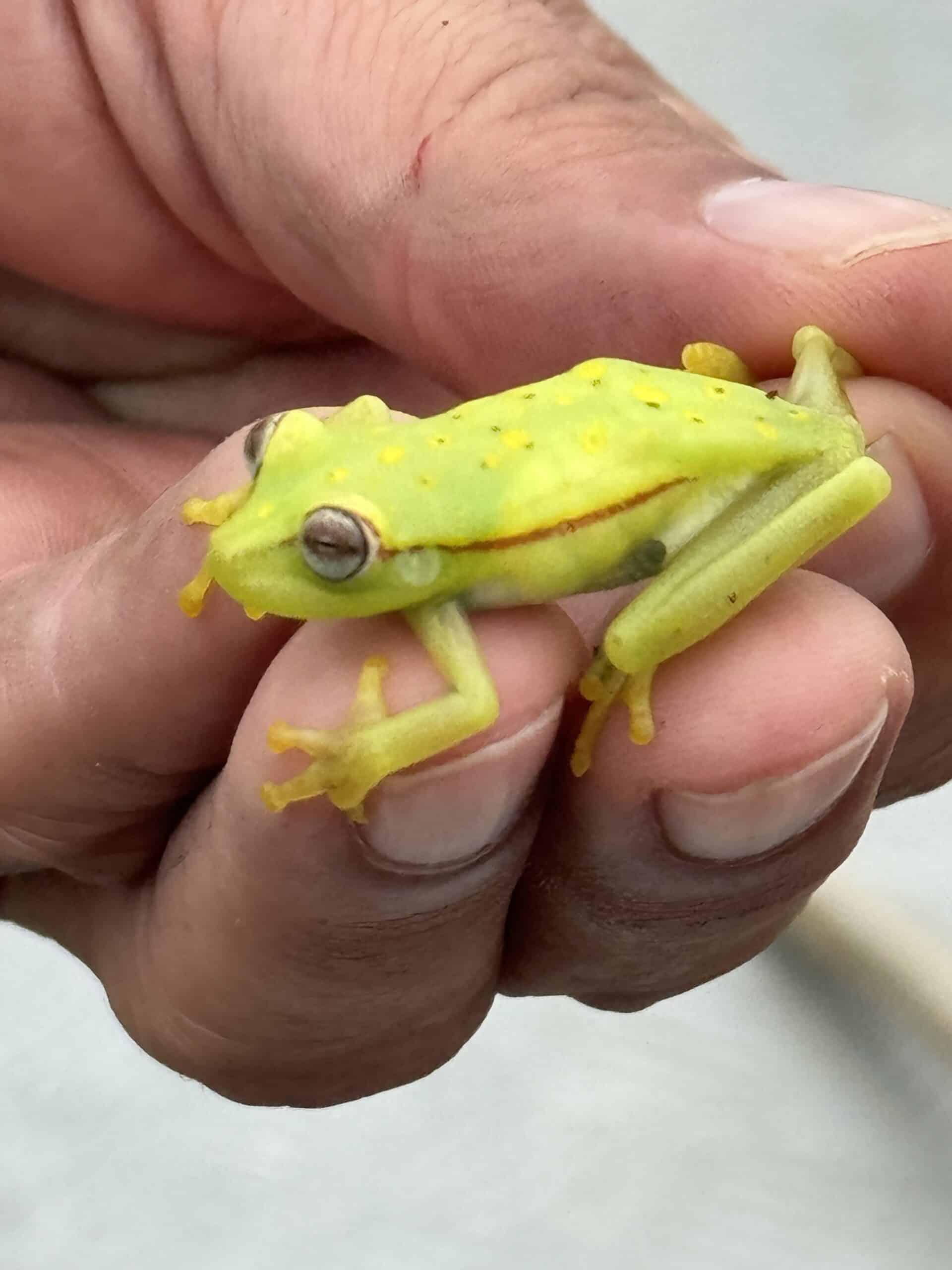
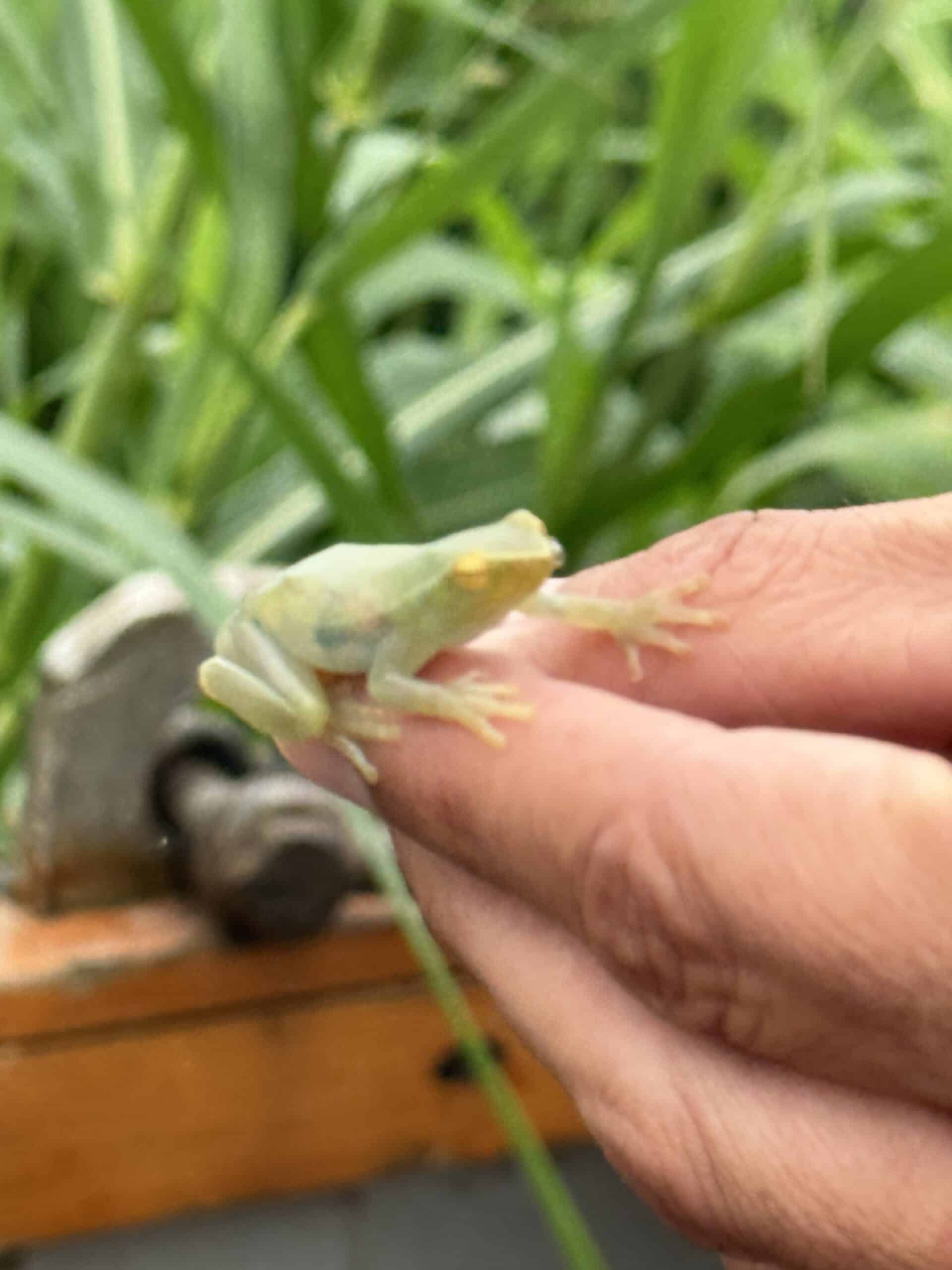
The tiny frogs were one of those moments. We eased into thick riverside vegetation, where the guides and boat drivers somehow spotted creatures I would never have noticed. Then they carefully brought a few closer for us to see. Looking through the photographs later, we found an astonishing variety of treefrogs: a little clown treefrog with bright yellow markings, a lime-green polka-dot treefrog, and others whose identities were harder to pin down. It was remarkable how much color could fit on something so small.
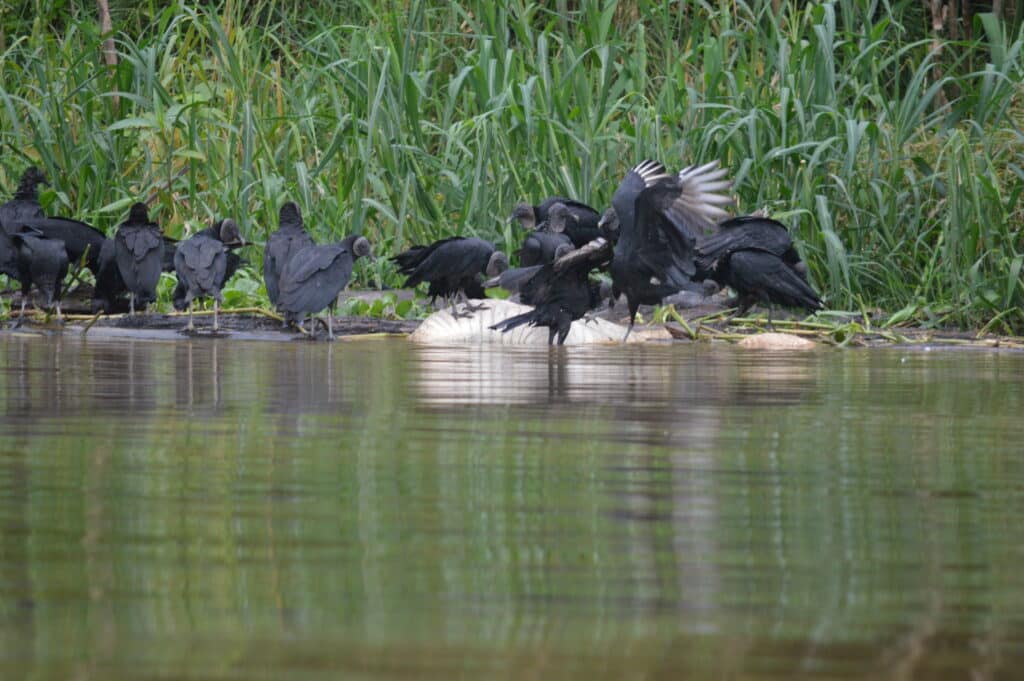
Farther along, we spotted a caiman lizard basking beside the water, its armored back and thick tail visible through the vegetation. After trying to make out wildlife in the dark on earlier outings, it was a treat to get a daylight look. Another sight was more life the circle of life: a dead caiman being fed on by birds. The river offered up the whole picture.
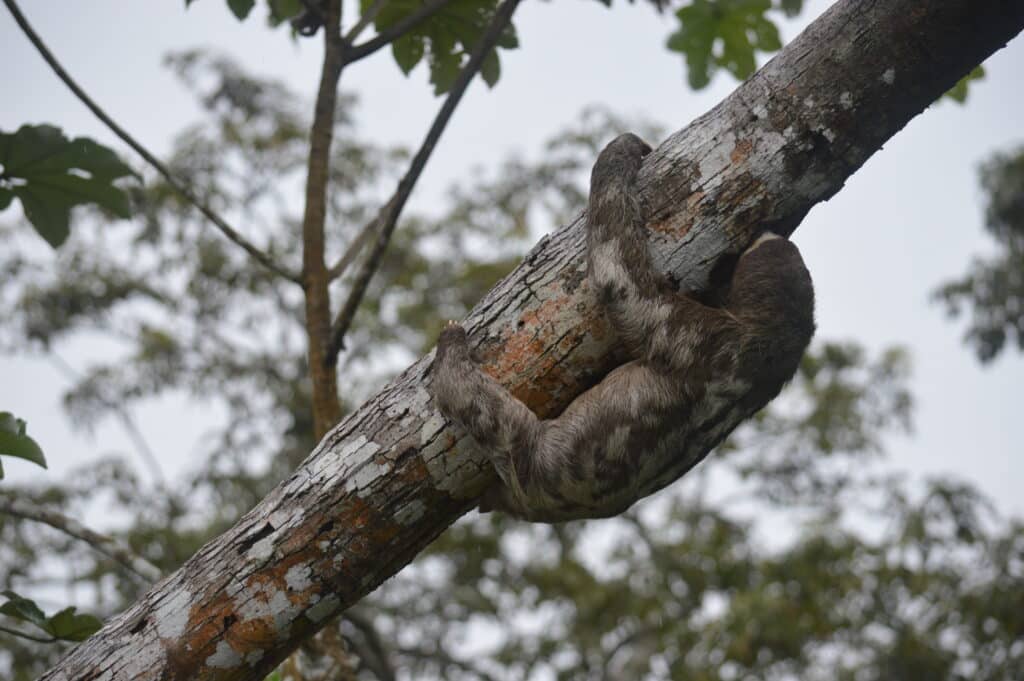
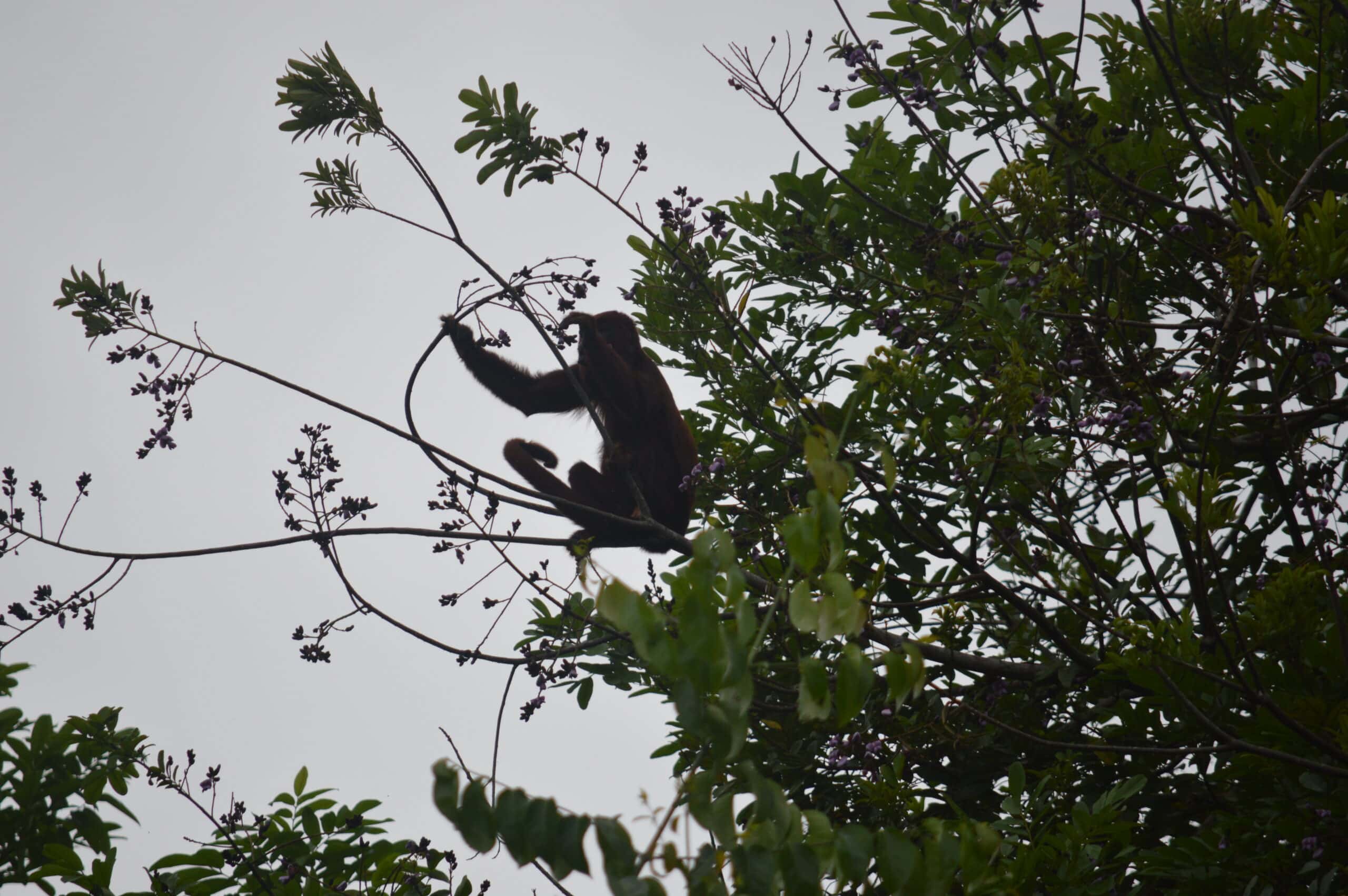
We also saw red howler monkeys and another sloth. “Another sloth” sounds almost ridiculous to write, but that was the strange thing about spending several days surrounded by so much wildlife. The first sighting was thrilling. After several more, we could catch ourselves treating something extraordinary as a familiar part of the day. We were still lucky; we were just getting used to being lucky.
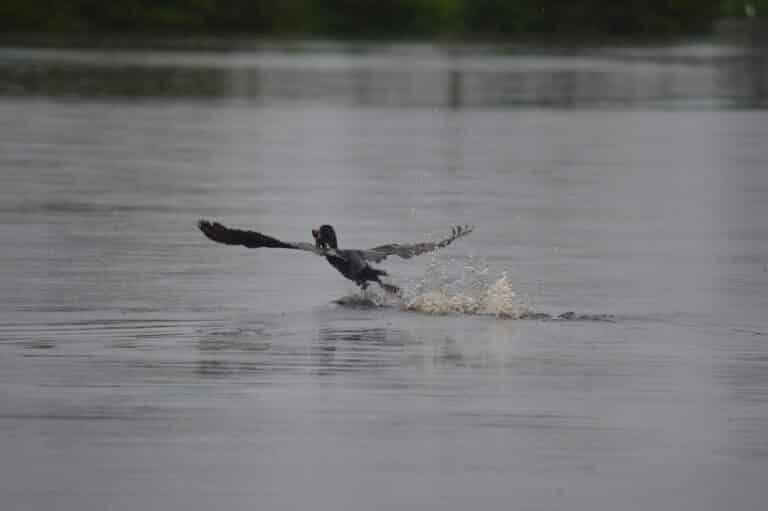
A gathering of white egrets lined the water’s edge and dotted the trees. A Neotropic Cormorant splashed across the surface as it grabbed lunch and took flight. Eventually, we headed back to the Delphin II for lunch ourselves.
After lunch came some downtime, a Pisco Sour, and another briefing before the afternoon outing. This excursion was called Magdalena, although our GPS tracking placed us leaving the Ucayali near Requena and heading into a smaller waterway.
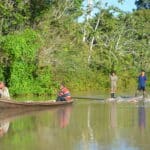
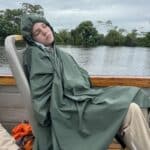
As we made our way along the river, we passed local people transporting logs, going about their work and a reminder that the River is integral to every aspect of locals lives. Birds in the branches gave us reasons to pause, and the guides found another sloth and another tiny clown treefrog. We were becoming familiar with some of these animals, but I still had no idea how the guides managed to spot them. Three blue-and-yellow macaws flew overhead, giving us a glimpse of their golden undersides and long, trailing tails, something you don’t get when you see them in a cage in the states, they were just flying freely. Charlie, meanwhile, was also feeling the bluring of days, and had settled comfortably enough into life aboard the skiff to fit in a nap.
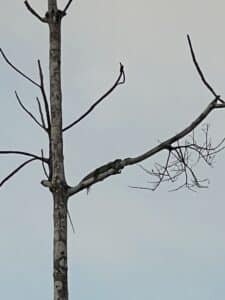
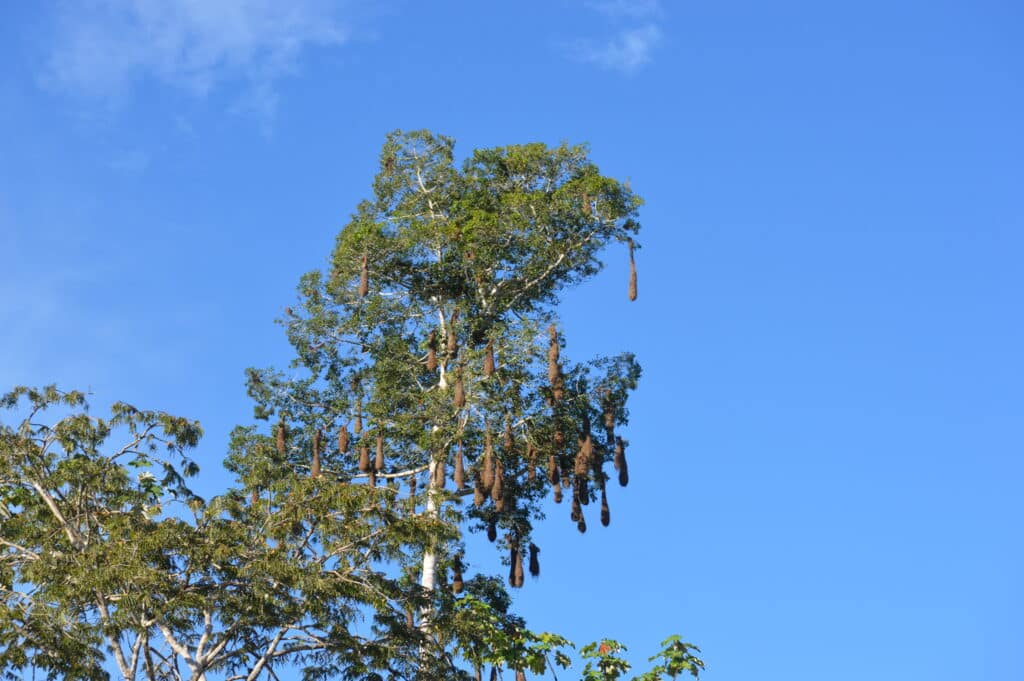
A green iguana lay so neatly along a branch that it almost became part of the tree. In another treetop, dozens of long brown shapes hung from the branches. What I took for hanging moss turned out to be a colony of woven bird nests, likely belonging to oropendolas. Even after days of looking, there was plenty I still needed help seeing.
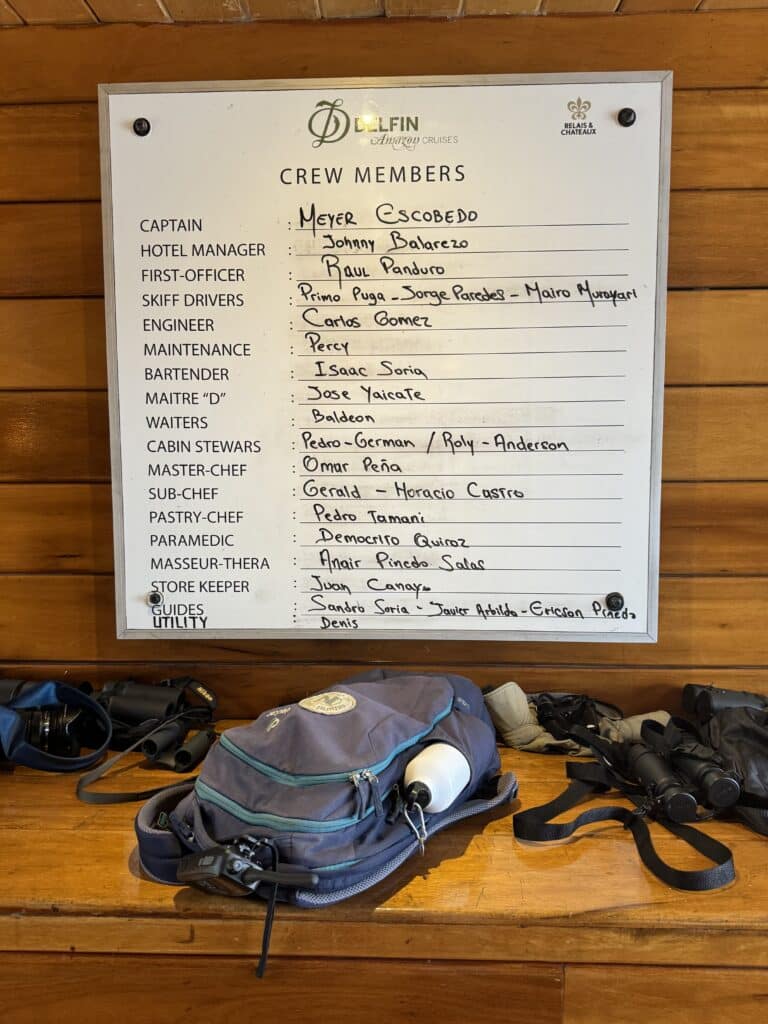
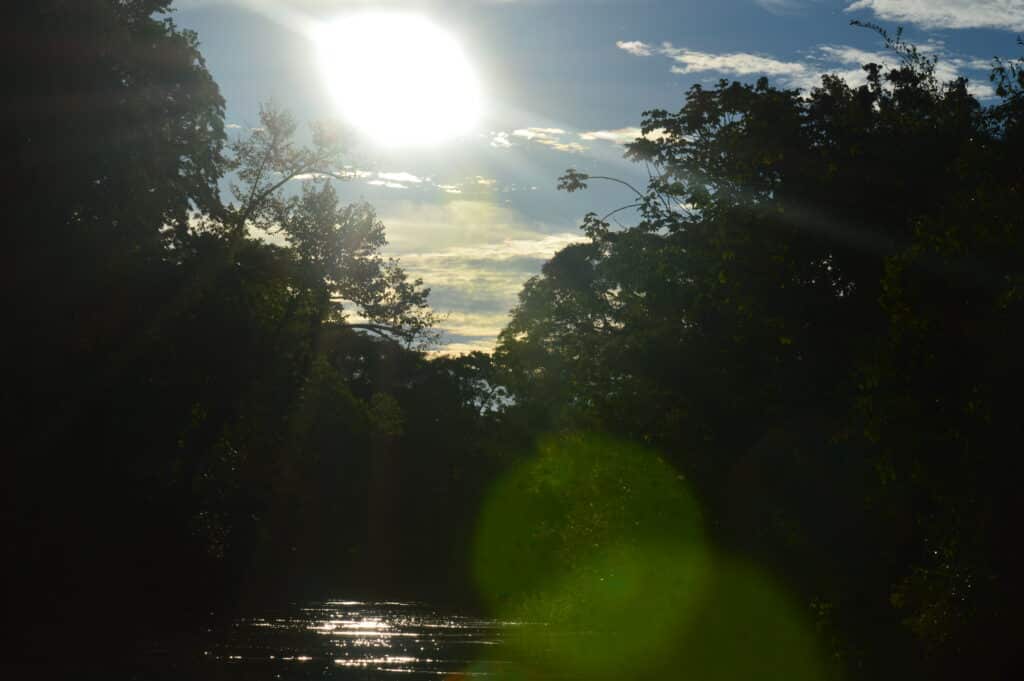
Then came another gorgeous sunset and another excellent dinner. Those, too, had somehow become part of our routine.The crew had written the staff members’ names and duties on our daily board. We’d seen it before, but it was worth stopping to appreciate just how many people made our days feel so effortless.
Pedro and Roly seemed to have our rooms clean every time we returned. The chef and kitchen team kept us more than amply fed. While we relaxed, the skiff drivers were still working, taking boats out to make repairs or clear tangled vegetation. Renzo and Guillermo knew the waterways and could identify almost everything we encountered. And Democrito, who felt to us like another fellow traveler, was there to look after us if anything went wrong.
Our days had become easy because theirs were full of work. They gave us the freedom to sit with our coffee, watch the river, and wonder what we might see next.